
Filter by Brand

Buy Latest Headworn Microphone At Best Price in Bangladesh
Headworn microphone prices can vary significantly because some products are only the microphone element, while others are complete wireless systems containing:
- Headworn microphone
- Bodypack transmitter
- Wireless receiver
- Antennas
- Power adaptor
- Batteries or battery compartment
- Audio output cables
- Rack accessories
This distinction is important when comparing prices.
Current Headworn Microphone at Expert Technologies BD
| Model | System Type | Current Price |
|---|---|---|
| Bosch R300-E-A | Professional UHF wireless headworn microphone system | ৳54,500 |
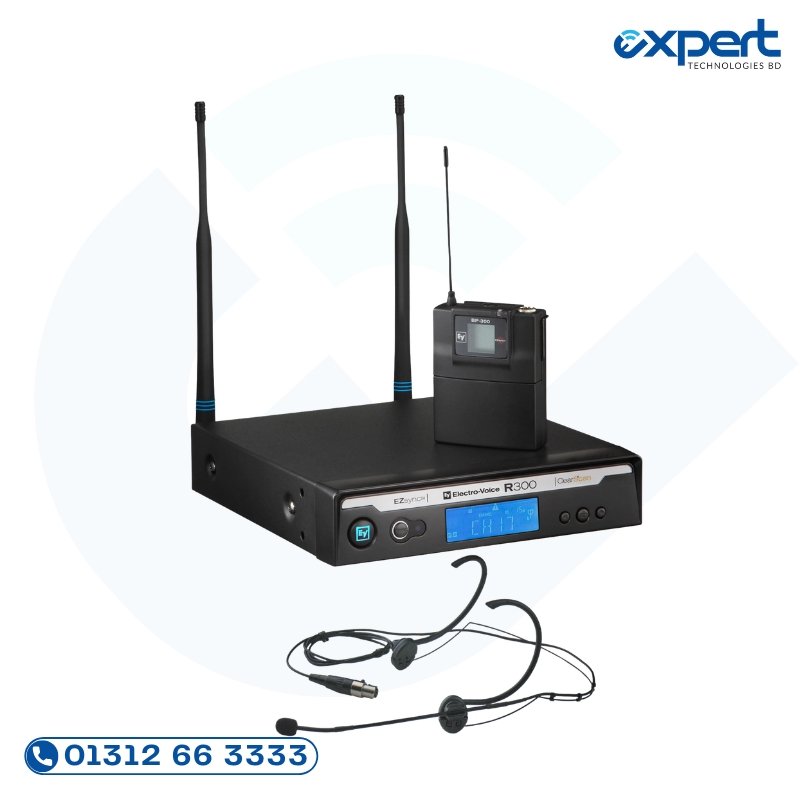
The Bosch R300-E-A currently listed by Expert Technologies BD includes an HM3 omnidirectional headworn microphone, BP-300 metal bodypack transmitter, diversity receiver, automatic ClearScan channel selection, EZsync setup, and up to 14 hours of typical battery operation from two AA alkaline batteries. Expert Technologies BD
Price Notice: Headworn microphone prices may change according to model, stock, exchange rate, wireless frequency band, transmitter/receiver package, and supplier pricing. Check the product listing for the latest price before ordering.
What Is a Headworn Microphone?
A headworn microphone, also called a headset microphone, is a small microphone worn around the user's head or ears with a boom positioned close to the mouth.
Unlike a Handheld Microphone, the user does not need to hold it while speaking.
This makes headworn microphones especially useful for people who need both hands free while moving, teaching, presenting, performing, demonstrating, or speaking for long periods.
Common applications include:
- Teaching
- Corporate presentations
- Training sessions
- Religious speaking
- Stage performance
- Theatre
- Fitness instruction
- Public speaking
- Product demonstrations
- Tour guiding
- Events
- Seminars
The microphone may connect directly to an audio device or, more commonly in professional wireless systems, to a bodypack transmitter.
How Does a Headworn Microphone Work?
A typical wireless headworn microphone system follows this signal path:
Voice → Headworn Microphone → Bodypack Transmitter → Wireless Receiver → Mixer / PA Amplifier → Speakers
1. Headworn Microphone
The microphone capsule sits close to the speaker's mouth and converts voice into an electrical audio signal.
Because its position remains relatively consistent while the user moves, it can provide more stable voice pickup than a microphone whose mouth-to-mic distance constantly changes.
2. Bodypack Transmitter
The microphone connects to a small transmitter worn on the belt, pocket, or clothing.
The bodypack converts the microphone signal into a wireless RF signal and sends it to the receiver.
3. Wireless Receiver
The receiver captures the transmitted RF signal and converts it back into audio.
4. Mixer or PA Amplifier
The receiver output connects to a compatible mixer, amplifier, audio interface, or PA system.
5. Loudspeakers
The final amplified signal is reproduced through the PA speakers.
Why Choose a Headworn Microphone?
The biggest advantage is hands-free operation, but there are several other practical benefits.
Consistent Microphone Position
A correctly adjusted headworn microphone remains close to the user's mouth.
This helps maintain more consistent voice level when the speaker:
- Turns their head
- Walks around
- Uses both hands
- Demonstrates equipment
- Writes on a board
- Performs on stage
Hands-Free Speaking
Headworn microphones are especially useful for:
- Teachers
- Trainers
- Religious speakers
- Fitness instructors
- Performers
- Presenters
The user can gesture, demonstrate, teach, or perform without holding a microphone.
Freedom of Movement
When combined with a wireless bodypack system, the speaker can move around the venue without being tied to a microphone stand or cable.
Close Voice Pickup
Because the microphone stays close to the mouth, the voice can often be captured more consistently than with a distant microphone.
Correct positioning still matters for feedback, breath noise, and speech quality.
Headworn Microphone vs Headset Microphone
In most commercial audio contexts, headworn microphone and headset microphone refer to essentially the same form factor.
Both describe a microphone worn on the head with a boom positioned near the mouth.
Manufacturers may use terms such as:
- Headworn microphone
- Headset microphone
- Head-worn microphone
- Earset microphone
- Head microphone
For SEO purposes, your page should naturally mention these variations, but the primary keyword should remain:
Headworn Microphone Price in Bangladesh
Wired vs Wireless Headworn Microphone
Headworn microphones may be used in either wired or wireless systems.
| Feature | Wired Headworn | Wireless Headworn |
|---|---|---|
| Movement | Limited by cable | High mobility |
| Receiver | Not always required | Required |
| Bodypack | Depends on system | Usually required |
| Battery | Often not in mic itself | Bodypack requires power |
| RF Interference | No | Possible |
| Setup | Simpler | Requires RF setup |
| Best For | Fixed/local voice systems | Teaching, stage, presentations |
Wired Headworn Microphone
A wired headset microphone may connect to:
- Portable voice amplifier
- Body-worn PA system
- Mixer
- Compatible transmitter
- Special microphone input
PA System BD, for example, lists portable voice amplifiers supplied with wired head-worn microphones for teachers and tour-guide applications.
Wireless Headworn Microphone
For professional applications, the microphone commonly connects to a wireless bodypack transmitter.
This gives the user freedom to move around a classroom, stage, worship area, or presentation venue.
Headworn Microphone vs Handheld Microphone
Both can provide clear speech, but the user experience is very different.
| Feature | Headworn Microphone | Handheld Microphone |
|---|---|---|
| Hands-Free | Yes | No |
| Position | Fixed near mouth | Controlled by hand |
| Movement | Excellent with wireless | Good with wireless |
| Sharing Between Users | Less convenient | Very convenient |
| Consistent Mouth Distance | High | User dependent |
| Best For | Teaching, training, performance | Speeches, interviews, shared use |
Choose a Handheld Microphone when the microphone needs to pass between several users.
Choose headworn when one speaker needs continuous hands-free operation.
Headworn Microphone vs Lavalier Microphone
Both are popular hands-free microphone formats.
| Feature | Headworn | Lavalier / Clip Mic |
|---|---|---|
| Position | Near mouth | Attached to clothing |
| Voice Distance | Very close | Usually farther away |
| Visibility | More visible | More discreet |
| Movement Consistency | Strong | Can change with clothing/head movement |
| Best For | Teaching, stage, fitness | Interviews, presentations, video |
A Clip/Lavalier Microphone is useful when visual discretion matters.
A headworn microphone is often more practical when the presenter moves actively and needs the microphone position to remain close to the mouth.
Headworn Microphone vs Podium Microphone
A Podium Microphone is generally fixed to a lectern, desk, or presentation position.
It works well for:
- Formal speeches
- Conference halls
- Lecterns
- Ceremonies
- Fixed presentations
A headworn microphone is better where the speaker must leave the lectern and move freely.
Omnidirectional vs Cardioid Headworn Microphone
Pickup pattern is one of the most important specifications.
Omnidirectional
An omnidirectional microphone picks up sound from multiple directions around the microphone capsule.
Advantages may include:
- Natural sound
- Less sensitivity to exact boom angle
- Comfortable placement options
The HM3 included with the Bosch R300-E-A is an omnidirectional headworn microphone. Expert Technologies BD
Cardioid / Unidirectional
A cardioid or unidirectional microphone captures more sound from the intended direction while reducing pickup from other directions.
This can be useful in louder PA environments.
For example, TOA's WH-4000H uses a unidirectional/cardioid design and is specified as a lightweight adjustable headset microphone.
Neither pattern is automatically better.
Selection depends on:
- Speaker placement
- Stage volume
- Background noise
- Required voice tone
- User movement
- Feedback risk
Headworn Microphone Connector Compatibility
This is one of the most commonly overlooked buying issues.
A headworn microphone cannot be assumed to work with every bodypack transmitter just because the connector looks similar.
Manufacturers may use:
- 3.5mm plugs
- Mini-XLR connectors
- Locking connectors
- Proprietary transmitter connectors
- Different wiring/pin configurations
For example, TOA's WH-4000H uses a 3.5mm monaural plug and is designed for compatible TOA wireless/bodypack equipment.
Before ordering, verify:
Microphone connector + transmitter model + wiring compatibility
Do not buy only by plug shape.
Headworn Microphone and Bodypack Transmitter
The bodypack transmitter is responsible for sending the microphone signal wirelessly.
Important bodypack features include:
- Frequency compatibility
- RF output
- Battery life
- Gain control
- Mute function
- Connector type
- Build quality
- Display/indicator
- Channel selection
The Bosch R300-E-A system uses a rugged metal BP-300 bodypack transmitter with its HM3 headworn microphone.
The bodypack and receiver must operate within the same compatible wireless system.
UHF vs VHF Headworn Microphone Systems
Wireless headset systems may operate in VHF or UHF frequency ranges depending on the product.
The RF band should not be selected simply because one sounds more “professional.”
Consider:
- Local RF environment
- Number of simultaneous wireless microphones
- Venue size
- Receiver design
- Available channels
- Interference conditions
- Regulatory requirements
- Required operating range
Your current Bosch R300-E-A is a professional UHF wireless headworn system.
For wireless systems, always use frequencies permitted for the intended location and application.
Diversity Receiver: Why It Matters
Professional wireless systems may use diversity reception.
A diversity receiver uses multiple antenna/reception paths to reduce signal dropouts caused by reflections or movement.
This is especially useful when a presenter moves around a room or stage.
The Bosch R300-E-A uses a dual-antenna diversity receiver, helping reduce wireless dropouts during mobile operation.
Automatic Channel Selection
In environments containing other wireless devices, selecting a clean RF channel can improve reliability.
The Bosch R300-E-A includes ClearScan, which automatically searches for a suitable wireless channel, and EZsync, which simplifies transmitter/receiver channel setup.
This type of feature can be especially useful in:
- Conference facilities
- Schools
- Event venues
- Worship spaces
- Training centres
- Stages
Headworn Microphone Battery Life
Wireless headworn systems normally rely on batteries in the bodypack transmitter.
Battery life varies by model.
The Bosch R300-E-A specifies approximately 14 hours of typical operation using two AA alkaline batteries.
Before purchasing, check:
- Battery type
- Expected runtime
- Battery indicator
- Rechargeable compatibility
- Availability of spare batteries
For full-day training or events, spare batteries should be available.
How Should a Headworn Microphone Be Positioned?
Proper boom placement affects sound quality considerably.
The microphone should normally sit near the corner of the user's mouth rather than directly in front of the lips.
This can help reduce:
- Breath noise
- Popping sounds
- Excessive bass
- Voice-level variation
Avoid placing the capsule so far away that additional gain is required unnecessarily.
The exact position may differ by microphone design and manufacturer instructions.
How to Reduce Feedback with a Headworn Microphone
A headworn microphone can still feed back if the PA system is poorly configured.
To reduce feedback:
Keep the Speaker in Front of the Microphone User
Avoid positioning the user directly in front of loud PA speakers aimed back toward the microphone.
Keep the Mic Correctly Positioned
Consistent close placement usually reduces the need for excessive gain.
Set Gain Correctly
Do not raise microphone gain beyond what is required for clear voice level.
Select an Appropriate Pickup Pattern
In high-volume environments, a directional microphone may sometimes provide an advantage.
Use Proper Speaker Placement
Even a high-quality microphone can feed back if loudspeakers are incorrectly positioned.
Avoid Unnecessary EQ Boost
Excessive frequency boosting can increase feedback risk.
Headworn Microphone for Teachers
Teachers frequently move around classrooms and need both hands for:
- Writing
- Demonstrations
- Books
- Computers
- Teaching materials
A headworn microphone allows the teacher to maintain a more consistent microphone position while moving.
For a small classroom, a portable personal voice amplifier may be sufficient.
For larger classrooms, auditoriums, or institutions, a wireless headworn system connected to the main PA system may be more suitable.
Headworn Microphone for Trainers and Presenters
Corporate trainers and presenters commonly need to:
- Operate slides
- Demonstrate equipment
- Write on boards
- Move among participants
- Gesture naturally
A wireless headworn microphone allows this without continuously holding a microphone.
This is one of the main intended use cases of professional systems such as the Bosch R300-E-A.
Headworn Microphone for Mosques and Religious Speakers
Headworn microphones can be useful when a religious speaker requires hands-free operation.
Applications may include:
- Religious lectures
- Sermons
- Teaching
- Religious programs
- Large gatherings
The microphone should be chosen according to:
- Required movement
- Speaker arrangement
- Feedback conditions
- Wireless range
- Voice characteristics
For a speaker who remains stationary at a lectern, a podium or gooseneck microphone may be more practical.
Headworn Microphone for Stage Performance
Performers often need both hands free.
Headworn microphones can therefore be useful for:
- Theatre
- Live hosting
- Acting
- Dance performances
- Musical stage programs
- Product launches
For stage applications, pay particular attention to:
- Pickup pattern
- Feedback resistance
- Bodypack durability
- Wireless frequency coordination
- Sweat resistance
- Cable construction
- Comfort
Headworn Microphone for Fitness Instructors
Fitness and movement-based instruction is one of the strongest use cases for a headset microphone.
The instructor can:
- Move freely
- Demonstrate exercises
- Keep both hands available
- Maintain a relatively stable microphone-to-mouth distance
For heavy movement or exercise, verify that the specific microphone is designed for the required level of physical activity and moisture exposure.
Headworn Microphone for Events and Seminars
Headworn microphones are useful when one primary presenter speaks for an extended period.
For audience Q&A or multiple speakers, however, Handheld Microphones may be easier to share.
A mixed system may therefore use:
- Headworn mic for presenter
- Handheld wireless mic for audience
- Lavalier for interview/panel use
The complete microphone system should be selected around the actual event workflow.
Lightweight Design and Wearing Comfort
Weight matters because a headset may be worn continuously for several hours.
The TOA WH-4000H, for example, weighs approximately 50g including its cable and uses an adjustable headband. PA System BD
When comparing microphones, consider:
- Headband pressure
- Single-ear vs dual-ear design
- Boom adjustability
- Cable weight
- Stability during movement
- Wearing duration
A microphone that sounds good but becomes uncomfortable after 20 minutes may not be suitable for full-day training.
Single-Ear vs Double-Ear Headworn Microphone
Single-Ear / Earset
Usually:
- Smaller
- Less visually noticeable
- Lightweight
But stability may depend strongly on individual fit.
Double-Ear Headworn
Uses support around both ears or across the head.
Advantages can include:
- Greater stability
- More consistent boom position
- Better suitability for active movement
The HM3 supplied with the Bosch R300-E-A uses a double-ear-hook headworn design. \
Headworn Microphone vs Wireless Microphone System
A headworn microphone is only the microphone form factor.
A wireless microphone system includes the communication components required to transmit the audio.
A complete wireless headworn setup typically contains:
Headworn Mic + Bodypack Transmitter + Wireless Receiver
This distinction matters because a low-priced headset microphone sold alone may not include a transmitter or receiver.
When comparing prices, always check what is included.
Factors That Affect Headworn Microphone Price in Bangladesh
Brand
Professional brands can differ in audio quality, build, connector system, wireless ecosystem, and warranty.
Microphone Only vs Complete Wireless System
This is one of the biggest price differences.
A microphone capsule alone can cost far less than a complete transmitter/receiver package.
Pickup Pattern
Omnidirectional and directional designs serve different environments.
Wireless Technology
Professional UHF systems with channel scanning, diversity reception, and multi-channel capability can cost more than basic systems.
Bodypack Construction
Metal bodypacks and professional connectors may increase durability and cost.
Receiver Features
Features such as:
- Diversity reception
- Auto scanning
- Multiple channels
- Balanced XLR output
- Rack mounting
can influence system price.
Battery Runtime
Longer operating times may be important for professional daily use.
Accessories
Package price may include:
- Receiver
- Bodypack
- Headset mic
- Power supply
- Antennas
- Rack accessories
- Carry case
Always compare the full package.
Current Bosch R300-E-A Headworn Microphone System
The Bosch R300-E-A currently listed by Expert Technologies BD is a complete wireless headset solution.
Key Features
- UHF wireless system
- HM3 omnidirectional headworn microphone
- BP-300 metal bodypack transmitter
- Dual-antenna diversity receiver
- ClearScan automatic channel selection
- EZsync channel setup
- 32 channels per band
- Up to 8 simultaneous compatible systems
- Approximately 14-hour battery life
- XLR balanced output
- 1/4-inch unbalanced output
- Tabletop or rack operation
The current listed price is ৳54,500, reduced from ৳78,000 at the time checked.
This makes it particularly relevant for professional presentations, training, worship, stage performance, and other applications requiring reliable hands-free wireless speech.
TOA WH-4000H Headworn Microphone Example
The TOA WH-4000H is a useful example of a standalone professional headset microphone.
Published specifications include:
- Electret condenser element
- Unidirectional/cardioid pickup
- Maximum input level of 120dB SPL
- 1.3m cable
- 3.5mm monaural plug
- Adjustable headband
- Approximately 50g weight including cable
PA System BD currently lists it at ৳10,500.
TOA also lists multiple headworn microphone options in its professional wireless ecosystem, including WH-4000A, WH-4000H and HM-22.
This demonstrates why buyers should check whether the listed price represents only the headset microphone or a full wireless package.
Common Headworn Microphone Buying Mistakes
Comparing a Microphone-Only Price with a Full Wireless System
A ৳10,000 headset and a ৳50,000+ wireless system are not necessarily comparable products.
Check what comes in the box.
Ignoring Connector Compatibility
Even identical-looking plugs may not use identical wiring.
Buying Wireless Without Checking the Frequency System
The transmitter and receiver must be compatible.
Choosing Only by Wireless Range
Sound quality, receiver design, feedback performance, channel management, and reliability also matter.
Ignoring Pickup Pattern
An omnidirectional microphone may work very well in one environment and poorly in another.
Poor Boom Positioning
Incorrect positioning can create breath noise, weak voice level, or excessive gain requirements.
Ignoring Comfort
Headworn microphones may be worn continuously for hours.
Assuming Every Headworn Microphone Is Wireless
A headset can be wired, wireless, or designed to connect to a separate bodypack.
How to Choose the Right Headworn Microphone
Before purchasing, check:
1. Application
Is it for teaching, training, mosque, fitness, stage, presentation, or theatre?
2. Wired or Wireless
Choose based on how much freedom of movement is required.
3. Microphone Only or Complete System
Confirm whether the price includes the transmitter and receiver.
4. Pickup Pattern
Choose omnidirectional or directional according to the acoustic environment.
5. Connector Compatibility
Match the headset to the correct bodypack or input.
6. Wireless Frequency
Confirm the transmitter/receiver frequency system and legal operating requirements.
7. Receiver Features
Look for features relevant to professional use such as diversity reception or channel scanning.
8. Battery Runtime
Important for long teaching, events, or training sessions.
9. Wearing Comfort
Check weight and headband design.
10. Boom Adjustability
The microphone should remain positioned correctly near the user's mouth.
11. Output Compatibility
The receiver output must connect properly to your mixer or PA amplifier.
12. Number of Simultaneous Systems
For multiple presenters, verify how many compatible channels can operate together.
Headworn Microphone Compatibility with PA Systems
A professional wireless headset receiver can normally connect to a compatible:
- PA mixer amplifier
- Audio mixer
- Powered speaker
- Portable PA system
- Audio interface
depending on the available output and input connections.
For example, the Bosch R300-E-A receiver provides both balanced XLR and 1/4-inch unbalanced outputs.
The headworn microphone itself does not connect to the 70V/100V speaker output of an amplifier.
It connects through the microphone/bodypack/receiver signal chain.
This is an important distinction in PA system design.
Why Choose Expert Technologies BD for Headworn Microphones?
Expert Technologies BD provides professional headworn microphone and PA solutions for educational, corporate, religious, event, training, and performance applications.
Support can include:
- Headworn microphone selection
- Wired vs wireless comparison
- Bodypack compatibility
- Wireless receiver selection
- PA amplifier compatibility
- Connector checking
- Wireless system planning
- Product supply
- Installation and setup
- Testing
- Technical support
For professional wireless projects, system compatibility should be checked before purchase rather than selecting the microphone only by price.
Frequently Asked Questions About Headworn Microphones
What is the Headworn Microphone price in Bangladesh?
Headworn microphone prices in Bangladesh vary widely depending on whether the product is only a headset microphone or a complete wireless system. Professional standalone headsets may cost several thousand taka, while complete UHF systems with bodypack and receiver can cost significantly more.
What is a headworn microphone?
A headworn microphone is worn around the head or ears and positions a small microphone capsule near the user's mouth for hands-free speech or performance.
Is a headworn microphone the same as a headset microphone?
In professional audio usage, the terms are often used interchangeably.
Is a headworn microphone wireless?
Not always. Some are wired, while others connect to a wireless bodypack transmitter.
What is a bodypack transmitter?
A bodypack is a small wireless transmitter worn on the user's body. The headset microphone connects to it, and the bodypack sends the audio signal to the receiver.
Which is better: omnidirectional or cardioid headworn microphone?
Neither is universally better. Omnidirectional microphones can sound natural and tolerate small placement changes, while directional microphones may help reduce unwanted sound in louder environments.
Is a headworn microphone good for teachers?
Yes. It allows teachers to speak hands-free while moving, writing, and demonstrating.
Is a headworn microphone suitable for mosques?
Yes, particularly when the speaker needs both hands free. PA speaker placement and gain should be configured correctly to manage feedback.
Can I use a headworn microphone for stage performance?
Yes. Headworn microphones are widely used for theatre, live hosting, performers, and presenters who require mobility.
Headworn or handheld microphone—which is better?
Use headworn for continuous hands-free operation. Use handheld when several people need to share the same microphone.
Headworn or lavalier microphone—which is better?
Headworn keeps the microphone closer to the mouth and is useful for active presenters. Lavalier microphones are smaller and visually more discreet.
Can any headworn microphone work with any bodypack?
No. Connector shape, wiring, bias voltage, and manufacturer compatibility can differ.
How can I reduce feedback with a headset microphone?
Position the mic correctly near the mouth, keep PA speakers appropriately positioned, avoid unnecessary gain, and use a suitable pickup pattern.
How long does a wireless headworn microphone battery last?
It depends on the transmitter. For example, the Bosch R300-E-A bodypack provides approximately 14 hours of typical operation using two AA alkaline batteries.
Buy Headworn Microphones in Bangladesh
When comparing Headworn Microphone prices in Bangladesh, first determine whether you are comparing a standalone headset microphone or a complete wireless system.
Check:
- Microphone type
- Pickup pattern
- Connector
- Bodypack compatibility
- Frequency system
- Receiver type
- Battery runtime
- Wearing style
- Boom adjustability
- Audio outputs
- Number of simultaneous channels
- Included accessories
Expert Technologies BD provides professional headworn microphone solutions for teachers, trainers, presenters, religious speakers, performers, seminars, stages, corporate presentations, and hands-free PA applications.
For compatibility checking, provide your existing wireless receiver/bodypack model or PA system information before ordering.